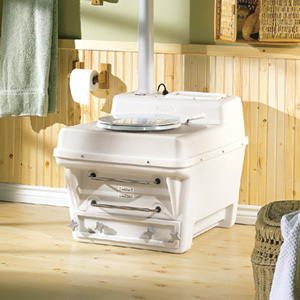
In the second of our “10 questions” series of interviews we are sitting down with Scott Smith, Vice President & CMO of Sancor industries Ltd. makers of Envirolet Composting Toilets. You may recognize the name Envirolet, they are the ones that produced that snappy video about composting toilets. Scott is also involved with the very cool blog Green Thinkers, and Envirolet Buzz.
1. The Naib:Could you tell me about your company? How did the company start? What got you interested in the composting toilet business?
Scott Smith: We have been manufacturing and marketing Envirolet composting toilets in Canada since 1977. My father actually started selling compost toilets back in the early 70s. He originally imported and sold systems from Scandinavia. By 1977 he had helped create his own line of composting toilets called Envirolet. How did I get into the industry? I was born in 1975, so I didn’t really have much of a choice as I was born into the business and composting toilet industry. I started hanging around the offices and production facilities by the time I was 10 and basically never left except to complete university.
2. The Naib:How do your systems work?
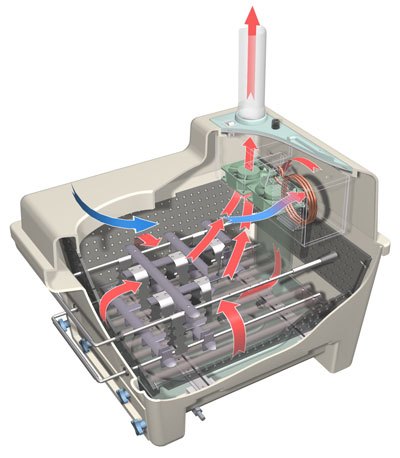
Scott Smith:Envirolet works on evaporation and composting with its patented Automatic Six-Way Aeration. This process circulates heated air around six sides of the waste in the system creating a great environment for composting and evaporation to occur. Waste is almost 90% liquid. Envirolet systems eliminate the liquid portion of the waste and the remaining 10% of solid material is composted through natural microbe-action.
3. TN:What are your most popular models?
SS:Our waterless models are still the most popular. The smaller all-in-one systems are popular because of their lower cost and because they can install almost anywhere. But, our Waterless Remote Systems have almost caught up in popularity because of the smaller and attractive toilet.
4. TN:Can the toilets handle heavy use say at a museum or other public location?
SS:We do focus on the consumer market, but our systems are used in commercial environments. With composting toilets, capacity is very important. Any system will function fine if it is used within its capacity limits. So, for commercial locations more than one system may be required. But, keep in mind that most commercial applications with regular flush toilets will have multiple toilets as well.
5. TN:Is there any difference between many people going number 1 and not so much number 2? Does this have any bearing on how the machine works?
SS:As long as the normal additives (peat moss, dark soil, coconut husks, wood shavings, sawdust) are added then this is not a major concern.
6. TN:Compare and contrast the user experience of composting toilets vs. flush toilets.
SS:Well, with out low flush models there is essentially no difference. You use it and flush it away. With a lot less water mind you. Our waterless systems are a bit different to use than a standard flush toilet. Self-contained systems are all-in-one units, so the waste/compost is located directly below the seat… We do have a trap that acts as a visual guard, although most people will usually take a peak. Peat and the other additives also help. So, if you can get over that difference you’ll be fine. Our other waterless systems, the Waterless Remote style, which has a waterless toilet in the bathroom and the compost unit below, act much like a flush toilet without the flush. The bowl is designed to help provide a natural visual guard. All that said, a change in attitude and a loss of the flush-it-away mentality will go a long way.
7. TN:What are the environmental benefits of a composting toilet?
SS:The water savings is one of the greatest benefits. Composting toilets use little or no water at all. Compare that to a normal flush toilet where a family of four will flush upwards of 30,000 liters of (fresh) water a year. Multiply that by the population of North America or the population of the world and you can see how much water could be saved if we all used compost toilets.
The UN lists sanitation as one of the top requirements alongside food and shelter. A compost toilet provides an economical on-site (i.e., right in someones home) sanitation solution. A sanitary and dignified solution that also saves the fresh water in the community for drinking and food production. Also, if communities use composting toilets the need for expensive sewage treatment plants is eliminated saving money for better purposes such as health care, clean water, and food.
8. TN:What makes your toilet stand out from the field? What makes your product the best? What recent advances have you made?
SS:Our Automatic Aeration process probably makes us stand out the most. But, there are a few other features we have that others don’t including dual fans (vs. 1), easy to access electric components that are away from any waste, the ability to up or downgrade a system in power, switch controls for normal and energy modes, a choice of colors, a wind turbine ventilator for top of vent, etc. Envirolet also does not require a step to us like some.
Last but not least, we also offer the longest warranty on our systems in the composting toilet industry with 5-years on anything inside the system and a lifetime on the body.
Most of the composting toilet systems on the market work too, of course. Envirolet just has more features.
We have a whole new line of systems coming out in the next week or so. I’m going to wait before letting you in on all the details. But, I can say that this new system eliminates some of the installation difficulties faced in certain applications. We’re pretty excited about this new system. Watch out web site or blog for updates.
9. TN:What is the cost of a composting toilet compared to a flush toilet?
SS:Manufactured compost toilets usually run from about $1000 to $3000 compared to $100 or so for a typical flush toilet hooked to the sewage system. This is one reason it’s hard to convert a suburban household to composting vs. flush toilet. If the infrastructure is already there, flush toilets are cheap. But, in areas where there is no sewage system or where the other alternative is septic, composting toilets win. Septic tank systems can run anywhere from $5000-30,000, not to mention the negative impact on the environment.
10. TN:What would you tell an average consumer to convince them to switch to a composting toilet?
SS:That using one is not that different! And that a composting toilet is one of the best things they can do on a personal level to save water and not pollute. Even if it’s just in a new addition or a cottage you will be saving a lot of water and reducing your footprint.
Do you have a website, phone number, email to let people know how to contact you?
Scott Smith
envirolet.com
enviroletbuzz.com
416-299-4818 or 1-800-387-5126 in the US
(And envirolet.ca for Canada and envirolet.eu for Europe).
GOGGLE FOR EARTH PUZZLE CURIOUS AND SOLUTION CLIMATE
CHANGE BY CONTROL LEVEL SEA PLANET
G O G G L E F O R E A R T H
DIVULGATION OF THE PROJECT LIFE WITH WATER
DEAR YES WE CAN TO BETTER OUR PLANET
BY READING YOU TO KNOW OF PUZZLE, BY OXIMORE,OXUSMORE, OXUSMOROS HOAX FOR THE MEN, ALL DISCERNMENT AND CAUTION FOR UNDERSTAND OF THE CLAIRVOYANCE, CLAIRAUDIENCE FOR SECULAR ABOUT THEME TO KNOW BY TEXTBOOK SCANNING MUCH ATTENTION BY PROPHECY TO LISTEN EVER SO MUCH OF THE BELIEVE ANCESTOR BY HERMENEUTICS.
“ IN HOC SIGNUS VENCIS ´´
OXUS
GIVE GATE-WAY
OUTWIT ORB
GET GAZE
GLARE GRANT
LET LEAK
EYESIGHT EBB
FIRST
OR
RISE
ENERGY
ALL SPARKER ATTIC
RIVER REVAMP
TRUE TURN TRANSFORMERS
HOLD HAVE
DEAR
ICE
NOBLY
BREAK
RECESS
ARRANGE
ZEAL
IDEOLOGY
LACK
EARTHDINBRAZIL
GOD´S ARE PRISIONER WITHIN SUN
BY VISCES PISCES
SCEPTER OF IRON
CHOSEN WIT CLEVER DIN
α Ω I KNOW IT FOR TRUE
REVELATION THREE OF THE KING´S
THE AMAZING RACE BY BACKING OF LIFE
PHI-5.72.53.10.21 IS INDICATOR PICTURE OF GOOGLE EARTH SEARCH
LOCALIZATIONOF THE ENERGHOM AND FALLEN BY LATITUDE AND LONGITUDE
SEAM
SYSTEM ECOLOGY ENVIRONMENT WORLDWIDE BRAZIL
SOLUTION HEATING GLOBAL
BALANCE OF THE NATURE
INTELLIGENCE ECOLOGY BY KEN
INFORM PLUS PROJECT LIFE BETTER PEOPLE IN THE WORLD INVITATION FOR GRAND SOLUTION HEATING GLOBAL
GRAND PROJECT FOR WORLD SATISFACTION FOR PEOPLE AND PLANET
SOLUTION COAST NORTH AREAS BRASILIENS ADVANCE SEA ATLANTIC
PROJECT WATER ALL PEOPLE AND PLANET ACTION FOR COMUNICATION OF MEMBERS STATES OF ONU / USA PRIORITY PREFERENCE HELP HUMAN THEY NEED OUTLIVE WITH WATER; IN ORDER THAT OUTLAST THE PEOPLE OF FUTURE; BECAUSE AT NATURE NEED OF THE HANDS MEN TO FOR CARE DAMAGE TO CAUSE UMBALANCE WEATTIME BY WAY OF MY GRAND PROJECT WHICHEVER BYSTANDER BUT ONE KINDNESS IN KEEPING TO FOR ORGANIZE KEEPON OVERHANG ALL OVER PLANET TO FOR SOLUTION CLIMATE CHANGE REDUCE LEVEL SEA IN PLANET, IN KEEPING WITH KEN ADVANCE WATER SEA FOR IN COAST BRAZILIENS ATLANTIC NORTH AREAS TO LIFE PEOPLE HOW TO RESIDE IN CONTRIES LOW,WORTH THE WHILE OUTLAST CITY OF VENEZA, COUNTRY NETHERLANDS, AND FLORIDA USA, KNOW HOW TO DO OUT OF DOUBT BYPATH ALL OVER TO FOR CLEAN SEAM CANAL IN RIVER THROUGH BY WAY OF TO REMOVE OBSTRUCTIONS SUNDER SUBSTANCE SOLID TATARS CALCIUM OF CORPUS MEN GIANTS ANCIENTS MILLION YEARS BEFORE CREATION OF ADAM AND EVA; CANAL IN RIVER KHETA, KAMA, IN SIBERIA KHATANGA WATER FRONT, NEXT SEA LAPTEV, KARA, LATITUDE 73º01´12.69´´N LONGITUDE 107º03´31.13´´L, LATITUDE 74º17´13.51´´N LONGITUDE 112º36´05.09´´L, LATITUDE 73º50´28;.84´´N LONGITUDE 110º16´44.34´´L, WATER COURSE TO COME DESERT, OVERRUN TANK LAKE BALKHASH, FOR DESERT TAKLAMAKAN TO COUNTRY NEIGHBOUR OF KAZAQUISTÃO, COURSE RIVER AMU-DARYA/ ANCIENT RIVER OXUS, SYR DARIA DESTINY TO FILL RUN TANK TO ARAL SEA SOLUTION TO ARAL SEA LEVEL TO SUPPLY, EXIST ONE PASSAGE, GATE-WAY IN ERZINCAN ONE FOUNTAIN, CITY IN TURQUIA LATITUDE 39º49´36.48´´N LONGITUDE 39º52´30.59´´L LATITUDE 39º59´03.48´´N LONGITUDE 40º15´21.89´´L LATITUDE 39º53´02.20´´N LONGITUDE 39º55´13.48´´L, THROUGH TO REMOVE SUBSTANCE SOLID TATARS OBSTRUCTIONS FOUNTAIN TO COME WATER RUN TO RIVER EUFRATES COURSE RIVER FOR MESOPOTAMIA TO COUNTRIES LIBANO, SIRIA, GOLAN FOR TO GROW COLD IN CITY ANCIENT DABRUS VOLCANO , OFIR HIDING PLACE TREASURY OF KING SOLOMON AND HIRAM, CAVE OF DRAGON, SERPENT, PURGATORY, OBSERVE IT ORIFICE HANDS LEFT AND RIGHT OF FIGURE OF SUDARIUS, LATITUDE 33º02´36.07´´N LONGITUDE 37º11´42.01´´L A NORTHEASTERN COUNTRY JORDANIA, FOR COURSE LAKE GALILEIA RIVER JORDAN, CONTROL LEVEL SEA DEAD. ENERGY INVISIBLE OF THE ARK OF ALLIANCE IS LORD OF THE ARMY, KNOWN IN MITOLOGY GREEK NAME “ARES ´´, IN THE PRESENCE OF GODS NAME OXUS, OPINION OF GODS, OXUSMOROS MEANING, DESTINY OF OXUS, INTO CHRISTIANITY NAME “MEN´´ TO MEET OF THE FOOT GIANT MEN, A HEAD SPHINX SIDE LEFT NEXT NECK PLACE LATITUDE 29º58´31.14´´N LONGITUDE 31º08´16.18´´L GATEWAY FOR PYRAMID. GO IN TO UNIFY FORCE, STRENGTH OF WILL FOR TO WIN, BY CIRCULATION WATER REDUCTION HEAT OVERHEAT NUCLEUS EARTH, BALANCE AXIS OF THE EARTH RETURN 23,45º NORMALITY FOR TRANSITION ROTATION OF THE IN GALAXY, EARTH DEVIATE OF SUN BALANCE CLIMATE. SUBSTANCE CHEMICAL RETIRED OF SOIL AND UNDERGROUND IS AGGREGATE IN PRODUCTS WARES HAND MADE IN SYSTEM MXK-4 OWN DAMAGE; WHERE HAPPEN ANOMALY IN BALANCE OF ECOLOGY. THANK MY FRIENDS, THANKFULNESS YOU WORK. PROJECT ASSOCIATION SYSTEM ECOLOGY ENVIRONMENT WORLDWIDE BRAZIL. SCEPTER IRON. THE GUARDIAN LIGHTNESS OF METEOR IN MARSILAC FOR PROTEGER IN THE SUN NEED WATER. FOR SECONDER THE SEAL. I AM CONCENTRATE LOOK BIBLE IN ISAIAH CHAPTER 49, MOMENT FORWARD MY MIND MORE VELOCITY OF LIGHT TO GET IN TOUCH WITH IN GODS, TO APPEAR ONE WALL, SHIELD OF LIGHT FELOW GOLD; BY UPLIFT, UPWARD HE SPEAK, BY CLAIRAUDIENCE; GOD OXUS ARE FOUR K, EVER FOUR, REMOVE OSBSTRUCTION CANAL RIVER AT FOUNTAIN OF WATER FOR MESOPOTAMIA MACEDONIA BESIDES OURS, SEPARATE HE OF ME, GIVE OR LEND A HAND FOR BEAR MACCABEES. DESTINY IN YOURS HANDS, TO EXPLAIN SPEAK OXUS BY OXIMORE ASCENSION INTO KNOW LEDGE OF STATE SUPERIOR OR TO ASCENDER OR KLI ACT ACROSS WITH GOD,INTO KABBALLAH IN 2006 D.C. OF THE YEAR 1.996 DC I AM HAVE RAVISHING FOR IN FORMER TIMES, UPLIFT ON UPWARD DIMENSION AROUND 01H40M DAYBREAK NOT TO REMEMBER MONTH, BY GRAND AIRSHIP SPATIAL TO HOVER NUCLEUS CRATER METEOR IN MARSILAC SÃO PAULO LATITUDE 23º51´56.55´´S LONGITUDE 46º42´57.28´´W EXTORT SHAPE CYLINDER LIGHTNESS ENERGY FRACTION SECOND HEAVENLY I AM LOOK GRAND THRONE LIGHTNESS AT ANGEL OF THE KINGS NAME CASSIEL, IMMEDIATELY RETURN MY CORPUS LIGHTNESS BY KNOW LEDGE, THEY GODS ARE PRISONER IN THE SUN MAIN, IT FACT I LOOK EVIDENCE AROUND TEN MINUTE WHERE LOOK OUT THREE SUN, INTO OF THE SUN MAIN,WHERE LOOK IN FRACTION SECOND TO SUCK INSIDE ITSELF WOVEN WITH REACTION OF ENERGY TO CAUSE LIGHTNESS DIFFERENT USUAL, PRISIONER AGAIN; THEY ARE PROBLEM IN UNBALANCE, DISTEMPER IN PLANET EARTH, I AM TO CHECK, TO CONFER YEAR AFTER. I´ M SELF SUFFICIENT FOR TO UNCOVER ENIGMA, LOCALIZATION FOR SIMULATION YOU GOT TO COUPLE HOLY LANCE BY OF THE A POINT LANCE INTO LATITUDE 33º 43´53.10´´N AND LONGITUDE 35º56´01.42´´L YOU MEETING OF THE ENERGHOM, BY ENIGMA OF RING OF KING CONSTANTINO ´´ IN HOC SIGNUS VENCES ´´LATITUDE 34º07´58.63´´N LONGITUDE 36º01´58.50´´L. A HALF A CROSS CENTER OF RING SIDE SUPERIOR MEANING ISLE OF CHIPRE FIRST EVA, PUNCTUATION MARK LATHE CROSS MEANING ROAD OF STONE PRECIOUS, THAT POINT, MARK BLACK, SIDE RIGHT FIGURE THE ONE STONES IN ROAD, IN TISSUE PICTURE OF MONALISA BESIDES INDICATION POINT RING OF KING CONSTANTINO, LIKENESS DIFFERENT BREAD WITH WINE INDICATION OF SAINT GRAAL. MEANING TO DIVIDE BREAD, PART HALFWAY MEANING SEPARATION OF CORPUS OF MEN GIANT AROUND OF PLANET EARTH, ISLAND CHATHAN LATITUDE 43º57´20.06´´S LONGITUDE 176º23´56.25´´W TO MEET LOOK SOIL AND UNDERGROUND COLLARBONE OF GIANT AROUND FORTY KILOMETER LENGTH, ,WITHOUT GIANTS OF HISTORY OF ENOCH, ANGELS TO PETRIFY OF STONES LATITUDE 44º53´11.65´´S LONGITUDE 69º06´33.37´´W LOCALIZATION CONTRY ARGENTINA BONE OF LEGS OF GIANT LATITUDE 36º44´05.05´´N LONGITUDE 37º36´04.53´´L LOCALIZATION ON TURQUIA, LEGS OF GIANT LATITUDE 33º36´10.45´´N LONGITUDE 36º25´44.39´´L LOCALIZATION IN CITY OF DAMASCUS CONTRY SYRIA, HEAD OF GIANT VALLEY GREEN GOLD WITH CONTRY SOUTH CHILE LATITUDE 53º10´57.2´´S LONGITUDE 72º4´18.03´´W, BECOUSE AREA THE LOCALITY IN VARIOUS INTO PLANET, FIRST GIANT, TALLNESS OF SUDARIUS, INTO COUNTRY EGYPTION TILL COUNTRIES IRAK MESOPOTAMIA, WITH INTUITION FOR TO DECEIVE MEN FOR TO PROTECT HOLY GRAIL, BY GEOMETRY MAPS OF ORIENT; RIDDLE, I´ HAVE KNOW LEDGE ENIGMA OF SUDARIUS, CROWN HEAD MEANING RIVER OF MESOPOTAMIA, RIVER EUFRATES, TIGER, PISON, SIDE LEFT MEANING RIVER TIGER A SERPENT, AT CENTRE SIDE RIGHT ONE LIGHTNESS MEANING HEART OF SUDARIUS IN TOPOLOGY QUANTIC IDEALIST THEORY PHYSICS EUCLIDIANA MEANING CORPUS FIRST GIANT; LOCALIZATION CITY OF PALMYRA LATITUDE 34º34´14.43´´N LONGITUDE 38º06´42.65´´L, COUNTRY OF SYRIA EXIST VARIOUS SUDARIUS, YOU NEED BELIEVE ON LOOK; WITH EYES OPEN, EYES CLOSED, FOUR FINGERS OF HAND LEFT, LACK FINGER THUMB , HAND LEFT WITH FIVE FINGERS, MEANING HOW ARE FORBID DIVULGATION FOR HUMAN NOT TO DISCOURAGE FAITH CHRISTIANITY,BECAUSE I BELIEVE ON GOD; CREATOR OF UNIVERSE, REMEMBER, WE HAVE WRONG YORE MANY YEARS PAST. SÃO PAULO, 04 JUNEth 2.009.
CONTACT FOR – SANCOSME@BOL.COM.BR.
OBSERVATION: ADDRESS WITH LATITUDE AND LONGITUDE YOU NEED TO CONFER PICTURE UNITED GOOGLE EARTH.
YOU NEED TO ACCEPT IDEOLOGY
BY SANSÃO COSME DA CRUZ/LOSCHI DIN LAGOSTA GAMA
I RECOMMEND THIS THE GOD´S GOT PARTICIPATION BIBLE BY PROPHECY OF THE PAPYRUS WRITTEN SCRIBE TO RECEIVE MESSAGE BY TO LISTEN, TO EXPLAIN MY KEN BY FACT TO HAPPEN AT MY LIFE, THERESFORE TO INFORM ANYBODY.THE HUMAN NOT YET READY CONNECTION WITH GOD NEED LOOK OUT WHEN HAPPEN, I RECOMMEND TO OCCUR; YOUR MIND ADVANCE MORE RAPID WHICH LIGHT WHERE YOU TO MEET WALL OXUS GOLD LIGHTNESS; MEANING TO LISTEN, AFTER, LOOK UP SURVEY, OUT OF DOUBT KNOW IN KEEPING WITH, KEEPON WITH KEN BY OXIMORE ODDS, DON´T WORRY, BY ALL MEANS; WHETER BUT BYSTANDER AT POSTURE HASTY AND NOT TO CAUSE TO DAMAGE, OR ATTEMPT LIVING. I´M WITH COMPROMISSE DEFENSE LIFE, DIGNITY HUMAN BY WRITE OUT KEN AND THOUGT SPEAK UP ALL OVER PLANET, EVOLUTION HUMAN CLEAR UP WHEN EACH LOOK FOR LIGHT INTO HEART.
HOW DOES IT GET TO YOU KEN?
I AM JUST LOOKING AROUND ANOMALY.
ANYBODY CAN YOU REPAIR THIS CHANNEL BY CLEANING?
HELP ME GET THEM OUT OF THE DRY.
CAN YOU HELP ME GET THIS ONE CUP WATER THEY TO SURVIVE?
DON´T WORRY WE´RE STAYING TO HOPE FOR ANYBODY FOR TO EXTEND YOURS HANDS.
I´D LIKE ANYBODY WHICHEVER KINDNESS BUT ONE SOW IT IDEOLOGY.
UP TO NOW THANKS, THE SOONER THE BETTER SCAN OF ENGINEERS AND SCIENTISTS.
BY SANSÃO COSME DA CRUZ – sancosme@bol.com.br
WE ARE EQUAL IN FRONT OF GOD
TO INCUR IN ERROR IS HUMAN, TO REPEAT AGAIN IS IDIOSSYNCRASY AFTER INFERENCE HERMENEUTICS CONSTITUTIONAL TO WOUND ORIGIN IN THE LIFE.
GRATEFULL BY PARTICIPATION AT ANY RATE ALL T DOCUMENT.
IF NOT TO INTEREST THEME, PLEASE DELETE THIS E-MAIL
BY SANSÃO COSME DA CRUZ LOSCHI DIN LAGOSTA GAMA SANCOSME@BOL.COM.BR
This website was… how do you say it? Relevant!!
Finally I’ve found something which helped me. Thanks!