jump to navigation

How Solar Panels Are Made – A Tutorial

Written by The Naib

So you want to know how solar panels are made? This tutorial will help you understand how solar panels are made, and some of the basic science of how solar panels work. This is intended as a general overview of how solar panels work. Each of the many topics covered in this tutorial could themselves have a whole tutorial written about them. This tutorial is aimed at people who don’t know a lot about electronics, and just want a general overview of how solar panels work without delving into too much depth about volts, and amps and other terms. I will try and keep it as simple as possible, if you are interested leave me a comment and I will write some more in depth tutorials on how solar technology works.

So first lets work on a bit of terminology.
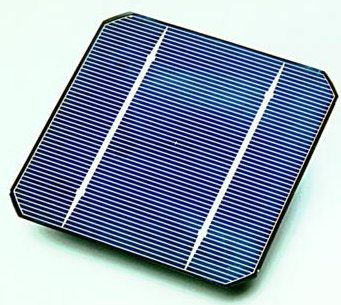
solar cell

Solar Cell: An photovoltaic (photo for light, voltaic for electricity) cell, or solar cell. Depending on what kind of solar cell you have it is made differently, we will talk about some ways to make them in a bit.

read moreRead the rest of How Solar Panels Are Made – A Tutorial

Greenspree’s Strawbale Home Update

Written by The Naib

Greenspree has been blogging about the construction of his new strawbale home at his very own My Sietch blog. He has posted an interesting but frustrating update.

straw bale on field

We bought out development permit the end of last week and got all the info to our mortgage broker.

Last Friday I got a call from her where she suggested we go through CMHC, even though we have a 25% down payment and can go with a standard mortgage, because the rates would be comparable and dealing with CMHC would somehow be easier. It wasn’t. Early this week she called back with some questions from CMHC on the strawbale construction and asked if we had experience in building with strawbales. I replied no, but it being infill only it shouldn’t be an issue. She said ok, and said she would talk to the CMHC. The next day she sent us an a-mail stating we would need a structural engineer to review and stamp the drawings and be present at each of the draw inspections.

I was, and still am, quite confused at this request as our building structure is being built with conventional stick framing that exceeds the NBC requirements. It seemed an arbitrary requirement and suggested that the CMHC representative didn’t have enough info on what we were doing to make informed recommendations. The fact that they did anyways, and one that adds considerable costs and delays to the start of our project seems irresponsible and unprofessional to me and I said so in a reply to our broker

Go check out the rest.
Want your own blog? Not afraid of a bit of beta testing, sign up here.

No Renewable Energy For Troops In Iraq

Written by The Naib

If you have a war for oil, you can’t have your soldiers using renewable energy can you? Especially if that renewable energy will help keep them from having to constantly risk their lives transporting fuel back and forth along dangerous roads.

renewable energy in iraq

It seems one Marine Corps Major General Richard Zilmer, the head of coalition forces in western Iraq, called for 183 solar- and wind turbine-equipped stations. He didn’t want to have to keep sending his troops up and down bomb and sniper filled routes just to get fuel to run the stations generators when there was plenty of sun in Iraq to power his base. “If this need is not met, operating forces will remain unnecessarily exposed… and will continue to accrue preventable Level III and IV serious and grave casualties”

The Joints Chiefs of Staff rejected that request, saying that the solar and wind technology are “not mature-enough” to use in the battle field. Solar panels have been in use since the 50’s how much more mature do they need to be? A solar panel will withstand a bomb just as good as any diesel generator will, so it’s not a matter of toughness. The problem instead seems to be lack of foresight from the Joint Chiefs.

This is yet another way in which we are not supporting our troops. No armor, no health care, and now no wind turbines. It is ironic that renewable energy could both save the lives of our soldiers in Iraq, and if used right, keep them from having to ever fight a conflict for oil in the first place.

This Kid Has The Right Idea

Written by The Naib

(you may notice the um, lack of posting Wednesday, Thursday and Friday, thats because in reality I am living it up on a tropical island paradise, and all these posts are on auto, I will be back Friday night.)

Banning The Bag

Written by The Naib
plastic bags

Trillions of plastic bags are made each year using millions of gallons of oil. The end result is mostly garbage. Once though of as a way to help keep forest from being cut down, the plastic bag is now one of the most common forms of pollution. We reported before on the little town of Leaf Rapids that banned the bag, well it seems that they have started a trend that a lot of people are following.

San Francisco did it, now it looks like the Australian state of Victoria and Hong Kong are going to give it a shot too.

If they are not outright banning the bag, they are adding a ten cent per bag charge that is hoped to discourage people from buying them. Many places in Europe are leading the charge to ban the tiny plastic demons. With Wales, Ireland, and Britain moving towards a ban, or a hefty price per bag to lower consumption.

Countries making headway

  • Since Denmark introduced a packaging tax in 1994, consumption of paper and plastic bags has declined by 66 per cent.
  • In October 2001, Taiwan introduced a ban on distribution of free single-use plastic bags by government agencies, schools, and the military. In 2003, the ban was extended to include supermarkets, fast-food outlets, and department stores. Customers must now pay T$1 to T$2 (30 to 60 cents) for a bag.
  • The Irish government says that a tax on plastic bags, introduced in 2002, has cut their use there by more than 95 per cent. The ‘plas tax’ has also raised millions of euros, to be used for environmental projects.
  • Bangladesh slapped an outright ban on all polythene bags in 2002 after they were found to have been the main culprit during the 1988 and 1998 floods that submerged two-thirds of the country. Discarded bags had choked the country’s drainage systems.
    In 2006, Hong Kong began a voluntary drive to reduce plastic-bag use. Since then, supermarkets have handed out 80 million fewer plastic bags.
  • The English town of Modbury became the first plastic-bag free town in Europe after all 43 of its independent retailers committed to banning the bag.

(via)

older posts »


Recent Comments:

Archive:


Authors: