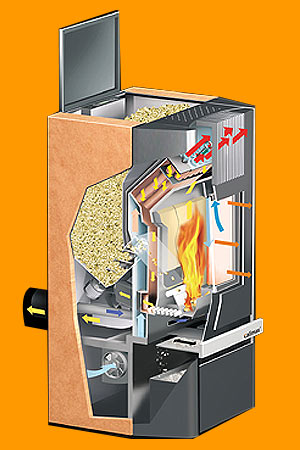
 Pellet stoves are growing in popularity. If you’re still unschooled on this handy heating device, it’s time you knew the basics. The pellet is good for the environment, and it looks great, too. What’s not to like?
First, what are they?
Unlike traditional stoves, pellet stoves don’t burn wood, but wood pellets stemming from waste chips and recycled sawdust. Corn pellets can also be used, but these are harder to find. Smoke from the stove comes out clear. It is vented through a pipe as opposed to a chimney. The heat from a pellet stove can warm even the reaches of a two-story house, often eliminating the need to turn on your central heating system. While the fuel used for the pellet stove is environmentally friendly, the appliance requires plugging into an electrical outlet.
What do they look like?
Another plus for the pellet stove: its good looks. It has the homey aura of a traditional, wood burning stove, without the side effect of emitting hundreds of pollutants into the air. Pellet designs vary significantly. Homeowners with modern sensibilities can select a trendy model in bright, bold colors. Other models are rustic and warm. And then there are endless varieties in between from companies such as Rika, Shimotani, Panorama, and Lopi Leyden.
Why are they good for the environment?
Being green is surely the best quality among the pellet’s many good qualities. Pellet stoves pollute less than EPA certified wood stoves or any other heating appliances that uses solid fuel. When properly installed, pellet stoves also has little adverse affect on indoor air.
Links:
It’s vitally important to check where your pellets come from. Unlike logs, which are easy to check the providence of, pellets could be a mix of just about anything, including tropical hardwoods or pristine boreal softwoods.
A great concept – just be careful.
According to the Pellet Fuels Institute, regardless of what type of wood is used for pellets, at least it’s making something of the wood waste (I hate to say wood is a waste) instead of filling land fills.
What about an oil furnace. No need to plug into an electrical outlet. Plus, with the new B5 biodegradable oil, it’s good for the environment and perfect for the home. It burns clean and it costs about the same as regular heating oil. Working for NORA I was able to research various heating alternatives, but I ended up leaning towards bioheat. It just seems like easier “greener” solution. Especially for existing oilheat users.
Look, check this site out, and you’ll see what I mean: http://oilheatamerica.com/index.mv?screen=bioheat
Ah yes, B5 — that’ll be 95% diesel, then. Really environmentally friendly and renewable.
Have a look at this link for the technical problems with B5: http://www.biodiesel.org/pdf_files/OEM%20Statements/2006_OEM_kubota.pdf
I love it when people make thinly veiled adverts as comments.
Hi Dean,
I really like the image at the top of the page – you don’t see many pics like that on blogs, that really demonstrate what is going on!
I like it alot! ;)
Keep up the good work man!
Buck
Like Buck above I really like the illustration as well. Have not seen that many good once like that around.
Wanted to give you a tip for a good pellet stove link as well. The US Department of Energy has a consumers guide with info on amongst other things Wood and Pellet heating. There are also links to other useful information.
The link is:
http://www.eere.energy.gov/consumer/your_home/space_heating_cooling/index.cfm/mytopic=12570
Keep up the good work!
Markus
If the fuel prices stay where they are and the wood pellet mills up production, wood pellet stoves will become much higher in demand than they already are.
Wait until states like New York, Pennsylvania, Massachusetts and New Hampshire catch on, then were really going to see a burst in the wood pellet stove industry just like the outdoor wood furnace industry. In that respect I mean nobody will be able to get a unit for 6-12 weeks. Companies like Harman are already finding it hard to keep up production.
I work for a company that is importing wood pellet stoves from Italy called Ecoteck wood pellet stove. And we have about 200 coming in with our first shipment and more to come the next month.
Really interesting article. Thanx. If you are interested in wood pellets please
check out this site – http://ecoenergogroup.com.
We sell high quality wood pellets at low price since all production facilities are located in Belarus.
I have a hard wood Viadrus 35 kW boiler and I look for addapting it to pellet burning. Can somebody give me infos about who can provide such transformation? Thak you.
It is true that the wider the sources of fuel the more likely it is that people will look to wood pellet and pellet stoves in general as a viable alternative to home heating oil and propane.
However I still feel that there is a reluctance on the part of households to embrace wood pellet as some see it as less convienent than homeheating oil or in some way more expensive (which is not the case – well not in the long term anyway.)
It is important to use a properly sized appliance for the space to be heated
Regards/-
Jason Webb
WOW!…
It is refreshing post The info I uncovered valuable. We’ve made note of it and definitely will have a look at back again in the future. Thank you.